With sights set on creating widespread, lasting change in people’s lives by expanding successful wheat value addition solutions and practices to reach a large number of people and embed change within the broader food system to transform societal systems and cultures, Technologies for African Agricultural Transformation (TAAT) has held a wheat value chain workshop in Bindura, Zimbabwe.
The training workshop, organised in partnership with the Zimbabwean Department of Research, Education and Specialist Services (D’RESS) in the Ministry of Lands, Agriculture, Fisheries, Water and Rural Development (MLAFWRD) and the SOS Hermainn Gmeinner High school in Bindura, held from 10–12 September 2025.
Running under the theme “Wheat Value Addition: Enhancing Quality, Increasing Profitability,” the training equipped farmers, teachers, and students with practical skills in processing wheat into diverse products, such as snack bars, breakfast cereals, biscuits, pasta, beverages, and baking innovations.
With a focus on inspiring schools, empowering farmers, and transforming Zimbabwe’s wheat value chain, the TAAT Wheat Value Addition Workshop brought together learners, teachers, farmers, and agricultural experts, setting the stage for a new era of wheat-based innovations and food security.
Self-sufficiency preceding valuing addition
Zimbabwe recently achieved wheat self-sufficiency, but officials say the next frontier lies in value addition.
In all its endeavours to increase wheat production and attain wheat self-sufficiency status, the country barely harnessed the significant role played by schools in contributing to wheat production and disseminating productivity-increasing technologies to learners as required by the Heritage-based curriculum (Education 5.0).
To address this challenge, the African Development Bank, through the TAAT Wheat Compact, launched a wheat production intensification programme that cascaded down to schools in Zimbabwe, involving them in wheat production and value-addition activities. It is worth recalling that TAAT, in 2024, introduced SOS Hermann Gmeinner High School to Early Generation Seed (EGS) production, establishing 2.5 hectares that yielded a remarkable 12 MT of foundation seed.
The school was provided with improved wheat seeds of high-yielding, disease-resistant and heat-tolerant varieties. The teachers and staff also underwent training on EGS production.
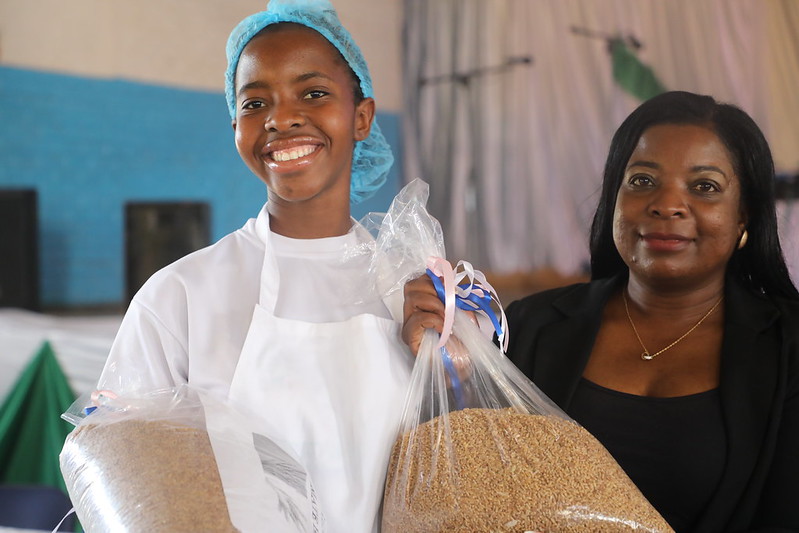
However, much of the wheat being produced is sold raw, resulting in limited profit and leaving farmers with a limited incentive to invest in better wheat technologies and subsequently improve their livelihoods.
It is against this background that TAAT organised the training workshop on value addition, with a view to harnessing the existing infrastructure in the food science department at SOS Hermainn Gmmeinner High School in Bindura to produce various value-added wheat products.
Head of the Crop Breeding Institute, Ms Purity Mazibuko, said Zimbabwe had already achieved wheat self-sufficiency but needed to focus on what happens beyond the farm gate.
“For too long, we have focused solely on production, often exporting raw wheat grain, missing out on the economic potential that lies further down the value chain,” she said.
“This training is showing learners and farmers that wheat can be transformed into noodles, beverages, cereals and even health snacks—products that generate more profit and create jobs.”
Value addition, according to Dr Zewdie Bishaw, the TAAT Wheat Compact Leader, is the process of transforming a product from its original state to a more valuable one, thereby increasing the returns/profits for farmers and businesses, and subsequently creating sustainable markets as it strengthens the connection between the farmer and consumer.
“Value addition enhances the shelf life of a product, as the product may be kept for a longer period of time without spoiling, allowing the producer to sell it at their preferred price and time,” he said.
“The TAAT Wheat Compact is supporting farmers to engage in value addition activities to increase the household incomes and create more jobs along the whole wheat value chain across Africa,” Dr Bishaw added.
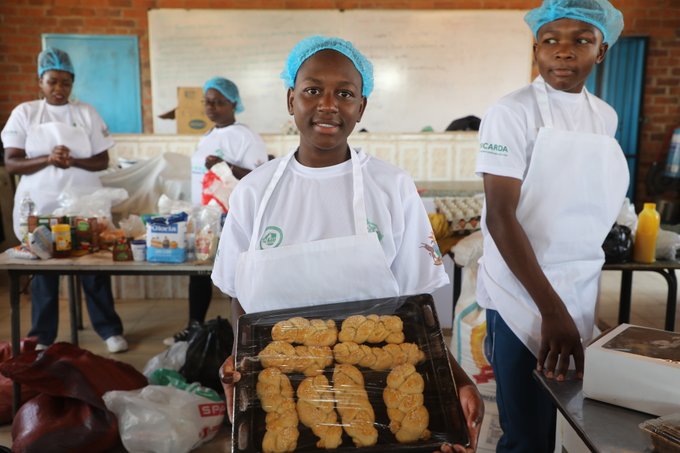
The workshop equipped 30 learners and 20 teachers with the skills to transform wheat into high-value products, including bread rolls, doughnuts, samosas, fortified moringa buns, baobab cookies, and rosella muffins.
A wheat movement with eyes on the future
“Catch them young. If we teach students early about the potential of wheat and its value addition, they carry these lessons into their communities and future careers,” said Dr Dumisani Kutywayo, chief director of D’RESS.
He said Bindura is a fitting host, noting that SOS Hermann Gmeiner High School has a track record in agricultural innovation.
“Last year, the school produced 12 tonnes of foundation seed from just 2,5 hectares of wheat. Young people are not only the future — they are already part of Zimbabwe’s agricultural transformation,” he said.
Experts believe that the training will have far-reaching economic and social impact. A Crop Breeding Institute (CBI) Wheat Breeder, Mr Masawi Jairos emphasised the importance of smallholder farmers in the country’s agricultural landscape.
“Smallholder farmers own 96 per cent of Zimbabwe’s arable land. By empowering youth and women through this project, we are changing lives, creating jobs and strengthening livelihoods,” he said.
The training also provided practical lessons in branding and marketing, ensuring that participants are equipped not only with baking skills but also with tools for entrepreneurship.
The workshop was conducted within an “innovation platform,” linking breeders, millers, extension officers, and farmers to sustain momentum beyond the classroom.
“This is more than just a workshop—it is a movement,” Dr Kutywayo said. “What starts here in Bindura will ripple across wards, districts, provinces, and eventually the entire nation.”
As Zimbabwe seeks to consolidate its food security, the workshop marks a shift from production to innovation—transforming wheat into a source of nutrition, employment, and national pride.
When Wheat Meets Madora: Innovation in Action
What happens when students, farmers, and teachers get hands-on with wheat? Pure creativity!
At SOS Hermann Gmeiner High School in Bindura, workshop participants experimented with wheat and local ingredients to produce exciting, nutritious foods, including Madora Pizza, Madora Wraps, Pumpkin Pie, Rosella Cakes, and Sesame Bread Rolls.
The 3-day TAAT Wheat Value Addition Workshop was packed with creativity, flavour, and purpose. The big lesson learnt was that wheat is not just a crop—it’s a foundation for food, income, and empowerment.
Nokutenda, a Form 3 student, shared her excitement:
“Today we had a cooking competition in groups, making so many unique dishes. I had never imagined a pizza with madora and cowpeas—but we made it! We also baked sour milk scones, bread rolls with sesame seeds, and pumpkin pie. We’ve learned a lot in this workshop, and we hope TAAT can extend this training to other schools too.”
Mr Masawi reflected on the impact: “This workshop has been a game-changer. We’ve seen participants produce unique value-added products—rosella cakes, moringa pies, madora pizza, even a resurrection cake. This is not the end—we will continue to support learners and farmers with the skills, ingredients, and financial capital necessary to spread the ripple effect across communities. This project will transform local food industries, create jobs, and drive economic growth starting right here in Bindura.”
Ms Lillian Machivenyika, CADS Lead Facilitator, added: “We’ve been training farmers and students to use local ingredients like beans, brown nut flour, rosella, and moringa to develop new products. Today’s exhibitions showcased madora pies, ribs, muffins, rosella cakes, and moringa bakes. By blending wheat with local foods, we are creating nutritious, diverse, and marketable products that can change lives.”
“From Madora Pizza to Rosella Cake, this workshop proved that wheat + innovation = opportunities for nutrition, jobs, and youth empowerment. This is not just about bread—it’s about building resilience, creating jobs, and transforming communities through food innovation,” Ms Machivenyika added